Parkour Hall Experience
Parkour Hall Experience
Designing an intuitive parkour experience that lowers barriers and increases motivation.
Designing an intuitive parkour experience that lowers barriers and increases motivation.
Project Overview
Project Overview
Project
Project
Final-year Project
(Quality Movement)
Final-year Project
(Quality Movement)
Role
Role
UX/UI Designer
UX/UI Designer
Time
Time
4 Weeks
4 Weeks
Team
Team
4 UX Designers
4 UX Designers
Problem
Problem
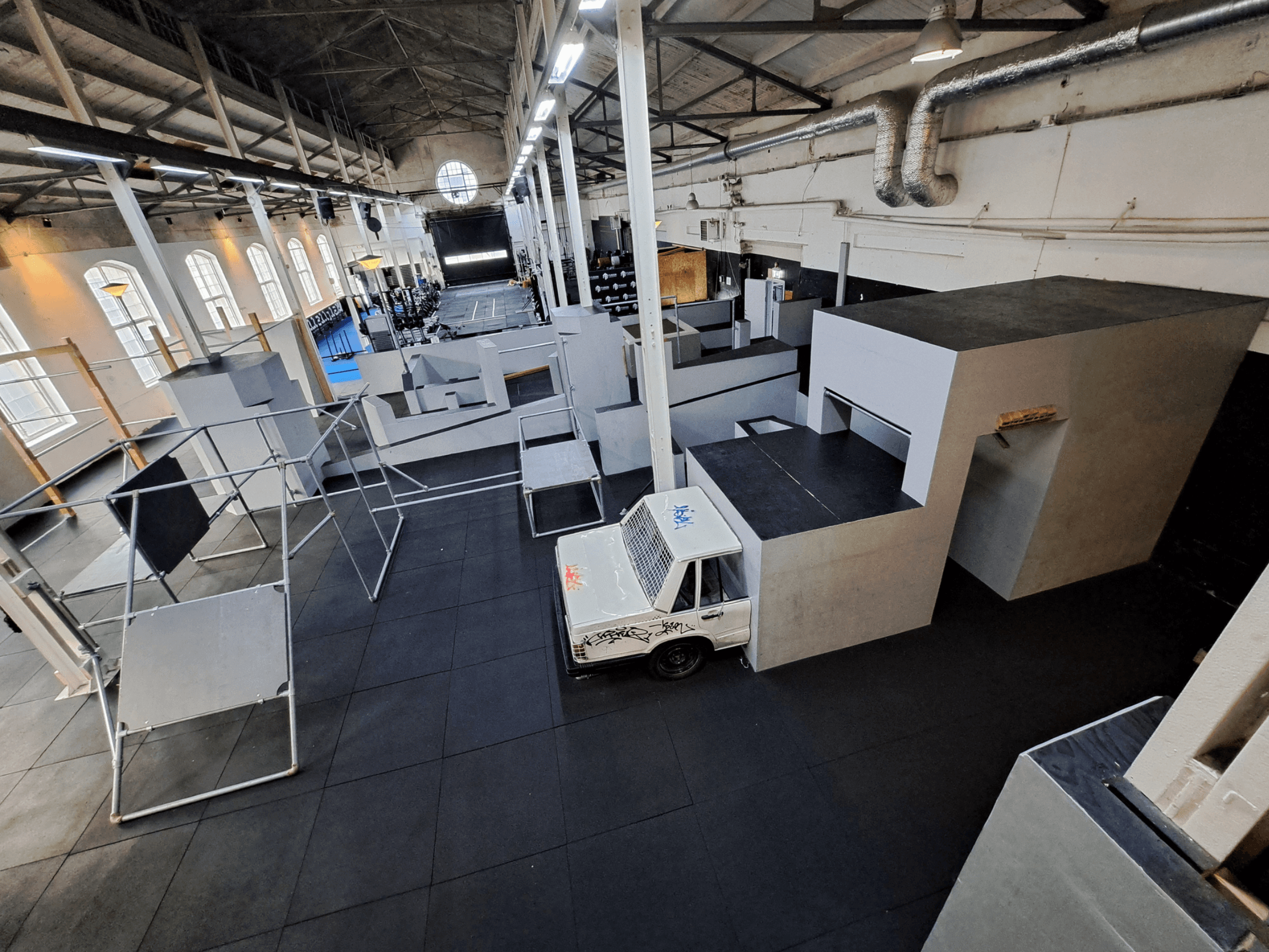
Parkourhall1 offers a unique training environment, but the overall experience lacks clarity, guidance, and motivation. New visitors often feel unsure about how to get started, creating a high barrier to entry, especially for beginners and children.
Parkourhall1 offers a unique training environment, but the overall experience lacks clarity, guidance, and motivation. New visitors often feel unsure about how to get started, creating a high barrier to entry, especially for beginners and children.
This project was initiated to improve the overall experience and make the space more intuitive and inspiring for all users. The goal was to help newcomers get started more easily, while strengthening the sense of community and encouraging repeat visits.
This project was initiated to improve the overall experience and make the space more intuitive and inspiring for all users. The goal was to help newcomers get started more easily, while strengthening the sense of community and encouraging repeat visits.
The target audience includes children, beginners with no prior experience, and more advanced practitioners.
The target audience includes children, beginners with no prior experience, and more advanced practitioners.
The main challenge was to design a parkour experience that feels intuitive without relying on instructions, while still supporting users of different skill levels. The experience should keep the focus on physical activity while also fostering motivation, progression, and community.
The main challenge was to design a parkour experience that feels intuitive without relying on instructions, while still supporting users of different skill levels. The experience should keep the focus on physical activity while also fostering motivation, progression, and community.
Research
Research
A combination of qualitative and quantitative methods was used to gather insights. The goal was to understand how practitioners experience parkour training and what motivates them to keep progressing.
A combination of qualitative and quantitative methods was used to gather insights. The goal was to understand how practitioners experience parkour training and what motivates them to keep progressing.
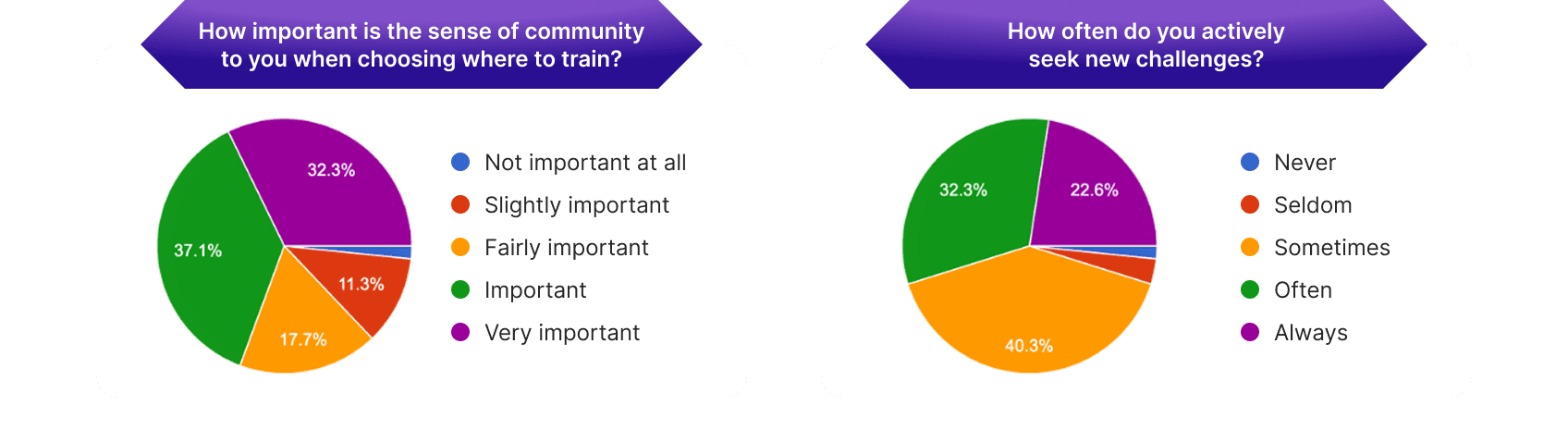
Over 60 survey responses were collected, alongside short interviews with four children during a training session and an in-depth interview with the owner of Katana Parkour. The physical environment of the facility was also observed to identify areas for improvement.
Over 60 survey responses were collected, alongside short interviews with four children during a training session and an in-depth interview with the owner of Katana Parkour. The physical environment of the facility was also observed to identify areas for improvement.
The findings showed that community is the primary driver of motivation, where participants learn from and push each other forward. At the same time, new visitors often feel overwhelmed and unsure of where to begin. The environment and equipment can feel intimidating, and text-based rules are frequently ignored.
The findings showed that community is the primary driver of motivation, where participants learn from and push each other forward. At the same time, new visitors often feel overwhelmed and unsure of where to begin. The environment and equipment can feel intimidating, and text-based rules are frequently ignored.
When comparing analog and digital solutions, most users preferred analog approaches during training, as they reduce the risk of distraction from mobile devices.
When comparing analog and digital solutions, most users preferred analog approaches during training, as they reduce the risk of distraction from mobile devices.
Children highlighted play, visible progress, and rewards as key motivators. Being able to track their development and receive tangible recognition after completing challenges was especially engaging.
Children highlighted play, visible progress, and rewards as key motivators. Being able to track their development and receive tangible recognition after completing challenges was especially engaging.
Define
Define
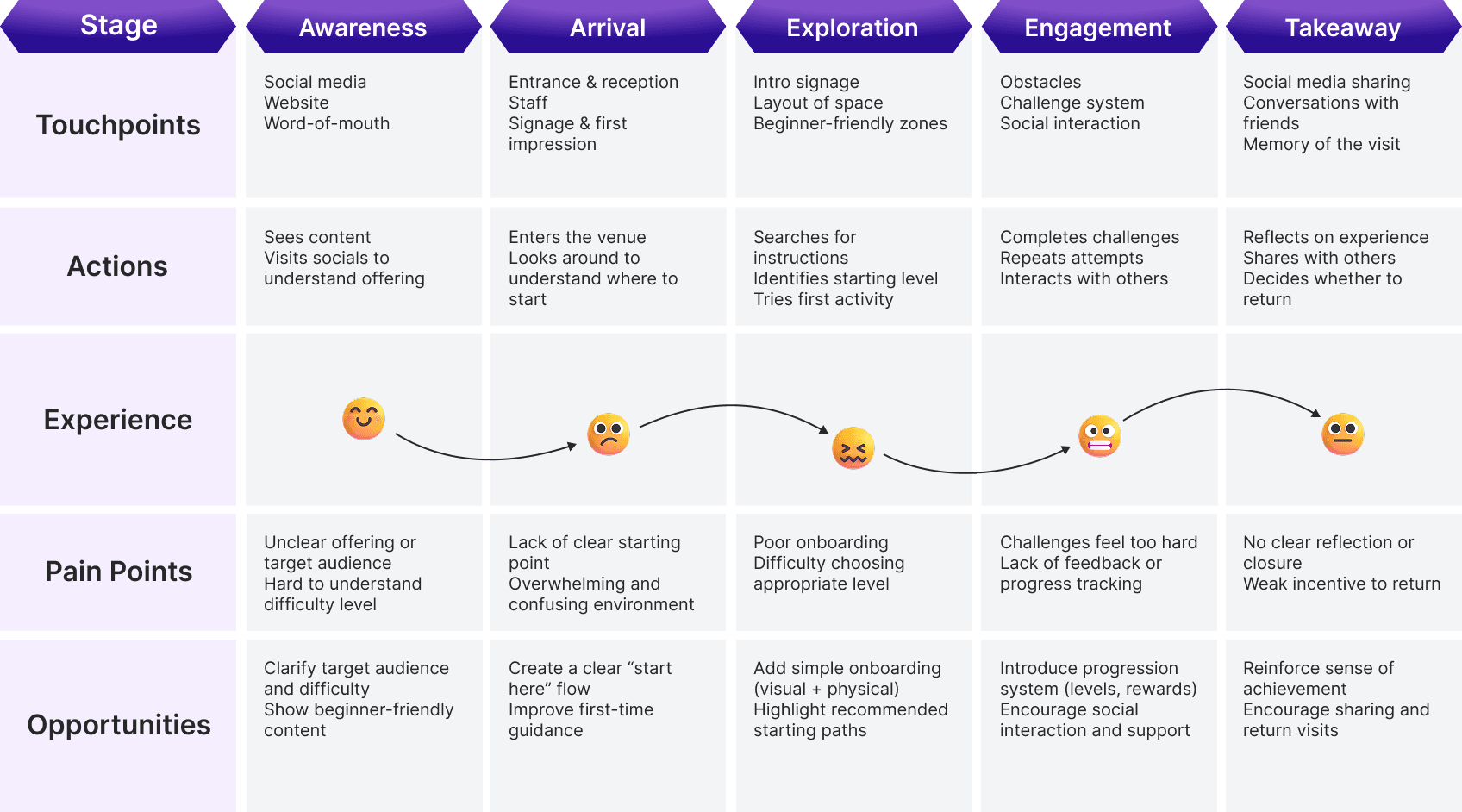
Based on the insights, three key problem areas were identified:
Lack of clear guidance within the space
High entry barrier for beginners
Unclear communication of rules and structure
Based on the insights, three key problem areas were identified:
Lack of clear guidance within the space
High entry barrier for beginners
Unclear communication of rules and structure
The following design principles were defined:
Visual and intuitive communication
Support for social interaction
Complement, not replace, the physical experience
The following design principles were defined:
Visual and intuitive communication
Support for social interaction
Complement, not replace, the physical experience
Ideate
Ideate
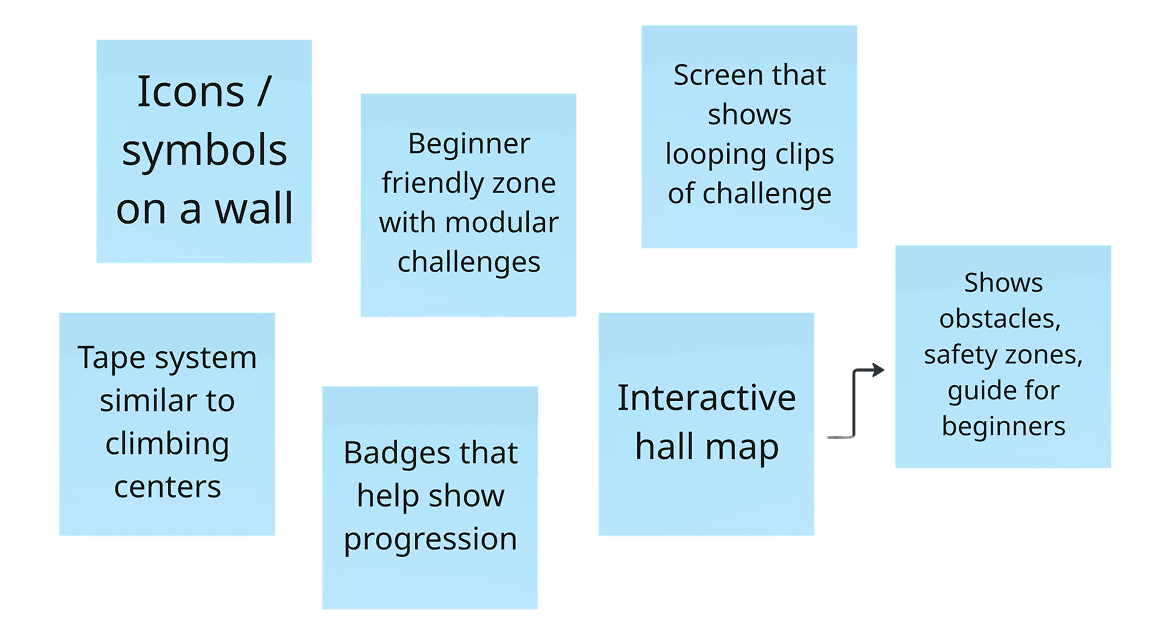
Ideas were developed for both analog and digital solutions. Text-based rules were transformed into symbols with shorter explanations.
Ideas were developed for both analog and digital solutions. Text-based rules were transformed into symbols with shorter explanations.
Zoning and visual markers were introduced to make navigation within the space easier. Level-based challenges were created to adapt training to different skill levels.
Zoning and visual markers were introduced to make navigation within the space easier. Level-based challenges were created to adapt training to different skill levels.
A social recovery area was also proposed, aligning with both stakeholder input and research findings.
A social recovery area was also proposed, aligning with both stakeholder input and research findings.
Additionally, a companion app concept was developed to support planning and progress tracking without interfering with the physical training experience.
Additionally, a companion app concept was developed to support planning and progress tracking without interfering with the physical training experience.
Wireframing
Wireframing
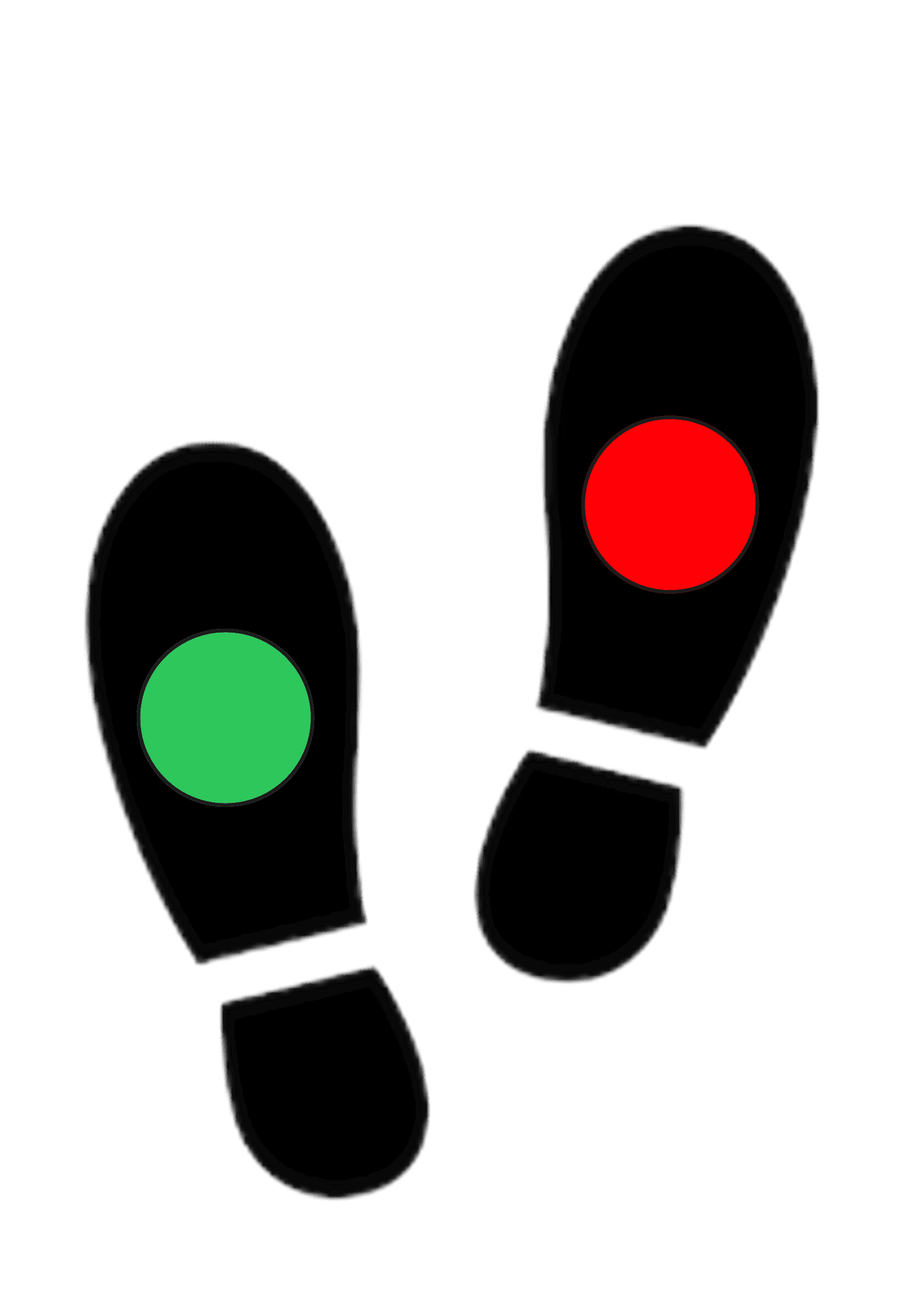
Different types of visual markers for guidance were sketched out, along with zoning concepts that were also reflected in the app for additional support.
Different types of visual markers for guidance were sketched out, along with zoning concepts that were also reflected in the app for additional support.
A structured level system for challenges was designed to help users choose the right difficulty based on their experience.
A structured level system for challenges was designed to help users choose the right difficulty based on their experience.

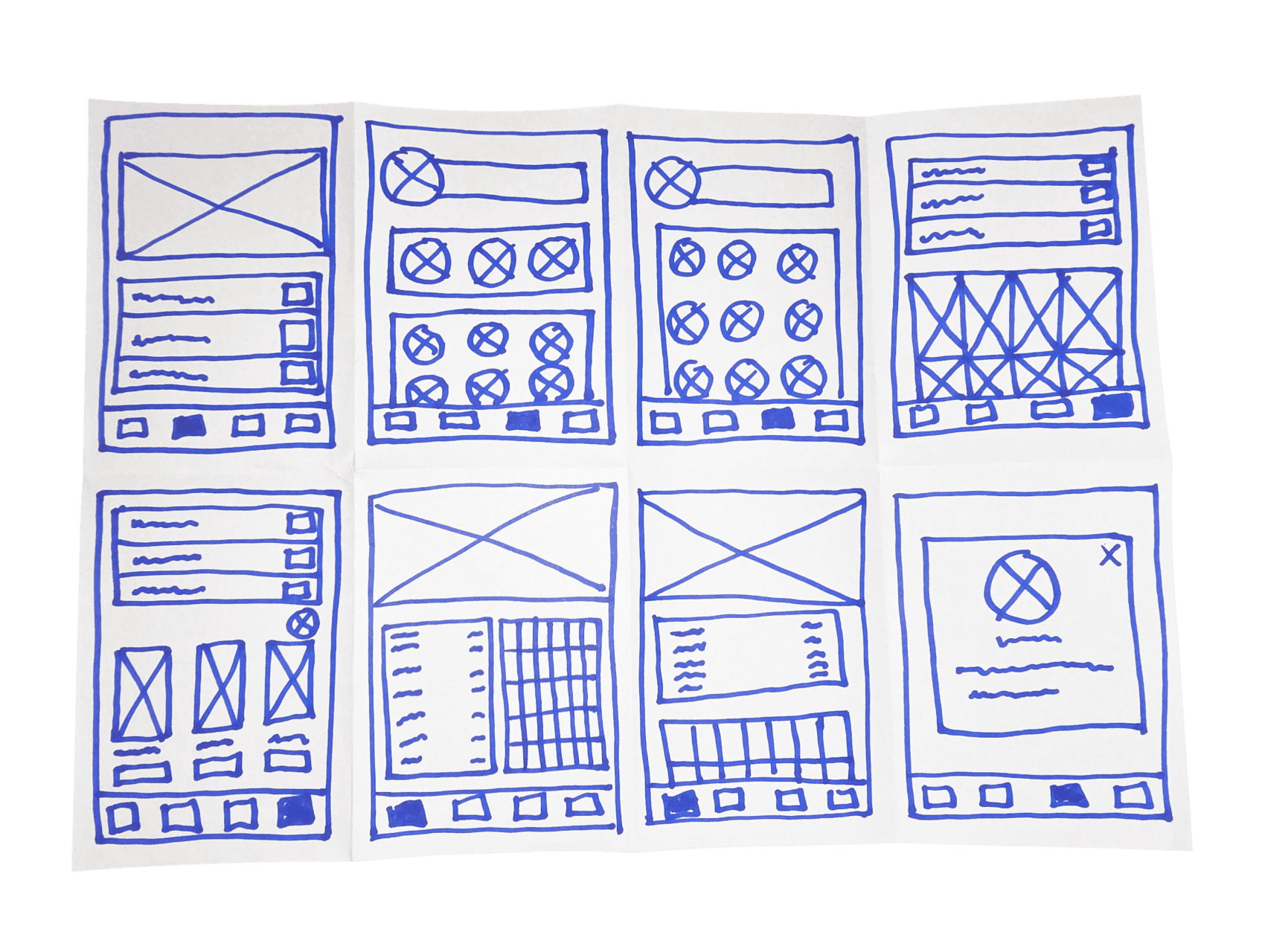
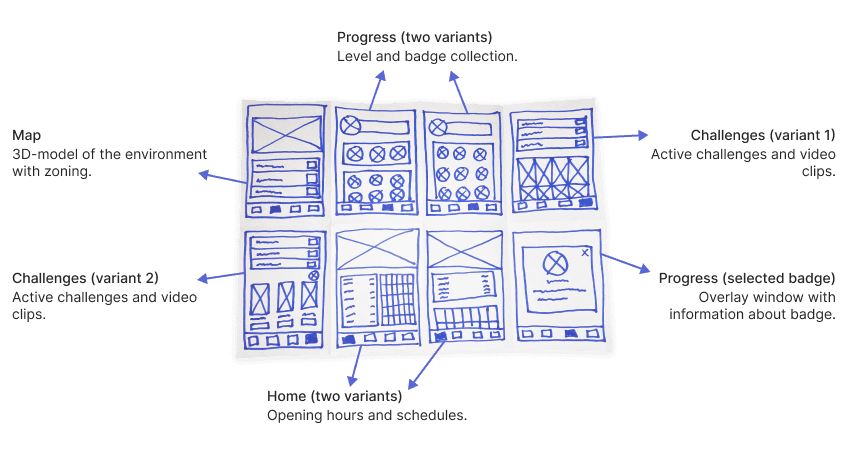
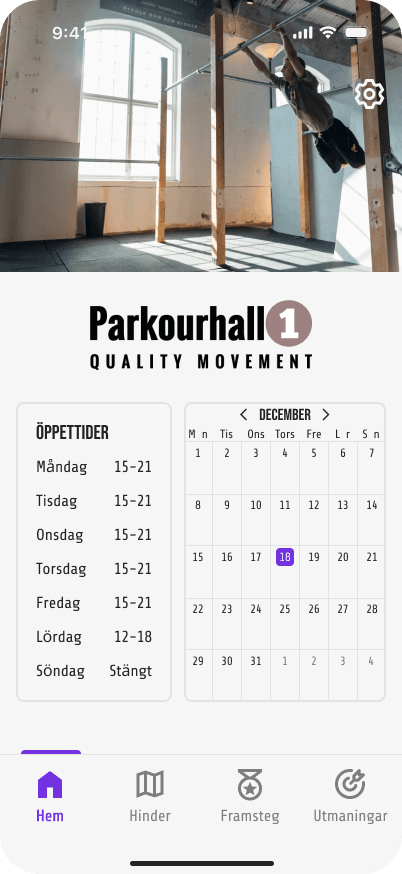
The app’s information architecture included features such as schedules, opening hours, and progress tracking.
The app’s information architecture included features such as schedules, opening hours, and progress tracking.
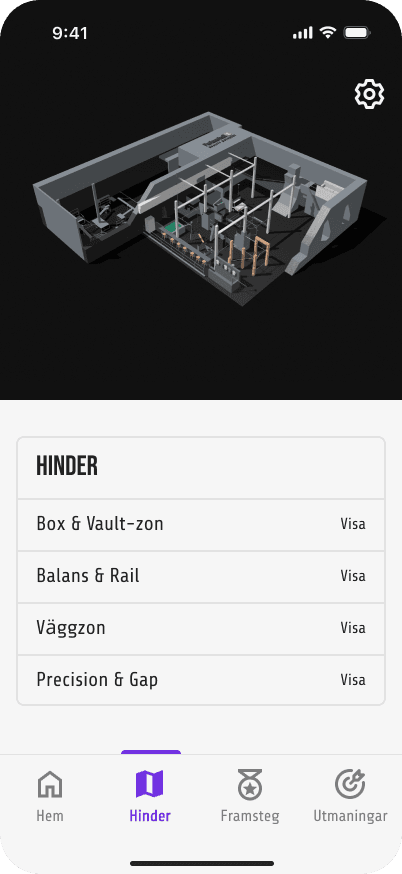
Map
3D-model of the environment with zoning.
Challenges (variant 2)
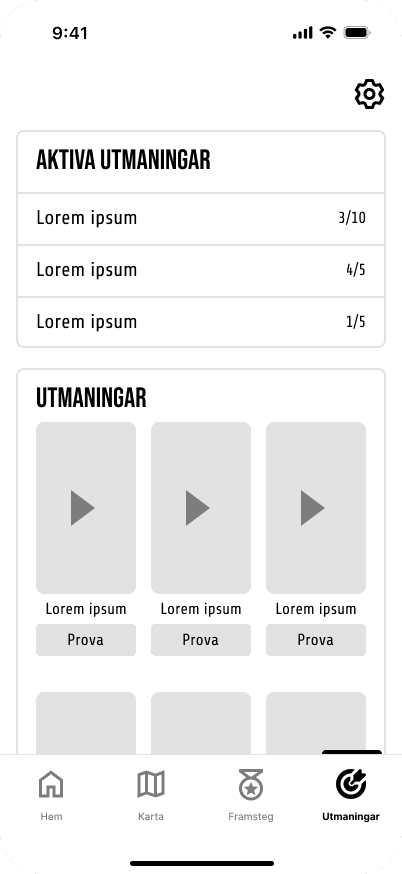
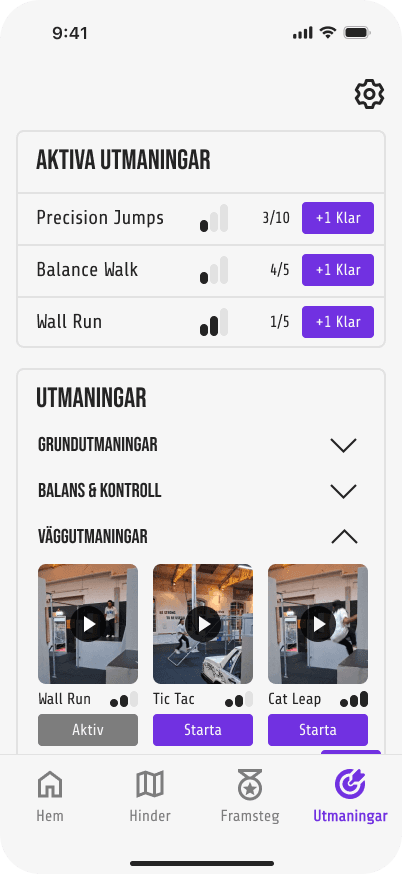
Active challenges and video clips.
Home (two variants)
Opening hours and schedules.
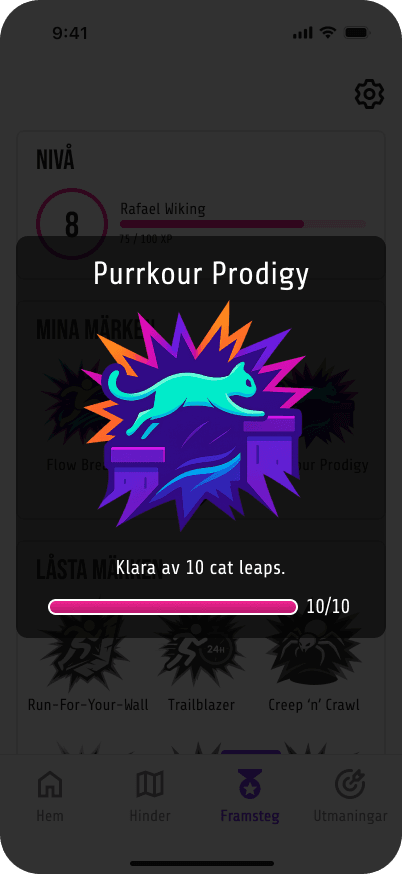
Progress (selected badge)
Overlay window with information about badge.
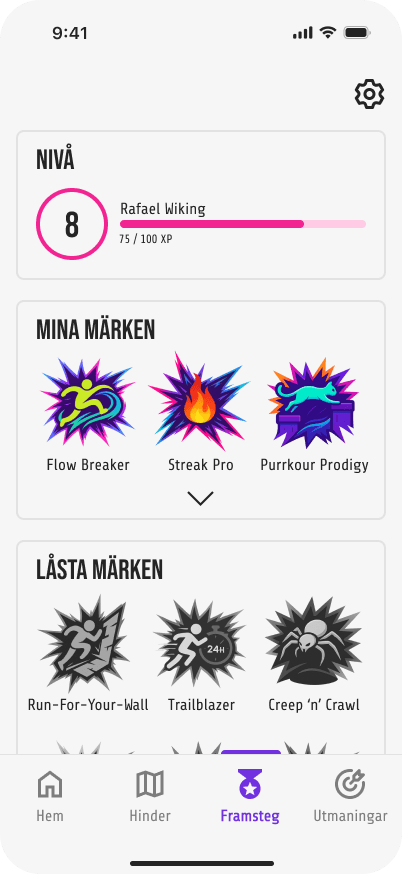
Progress (two variants)
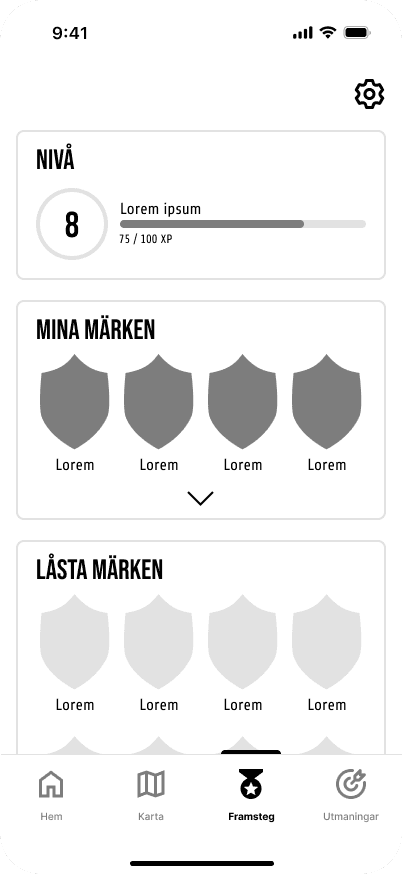
Level and badge collection.
Challenges (variant 1)
Active challenges and video clips.
Prototyping
Prototyping
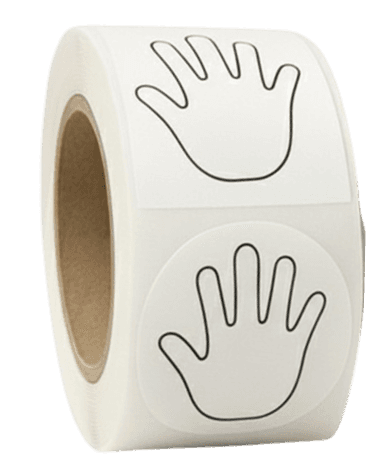
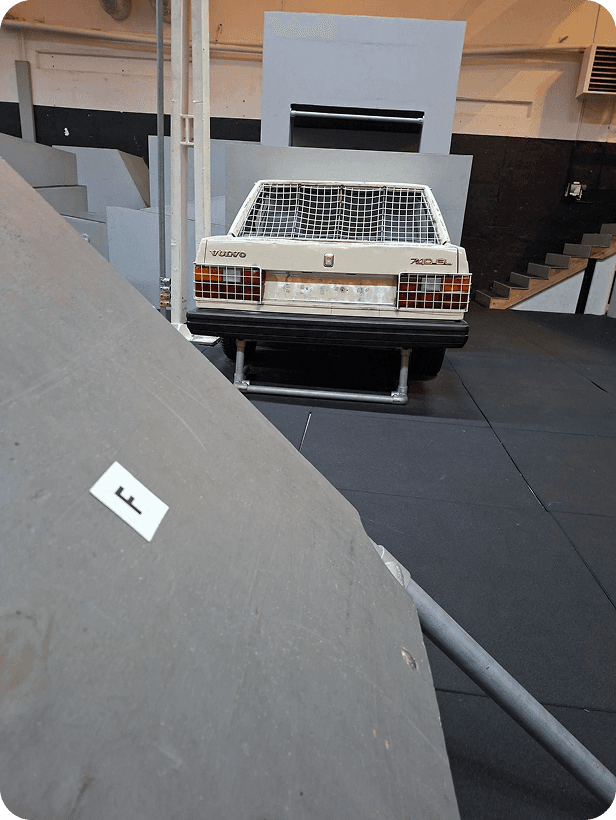
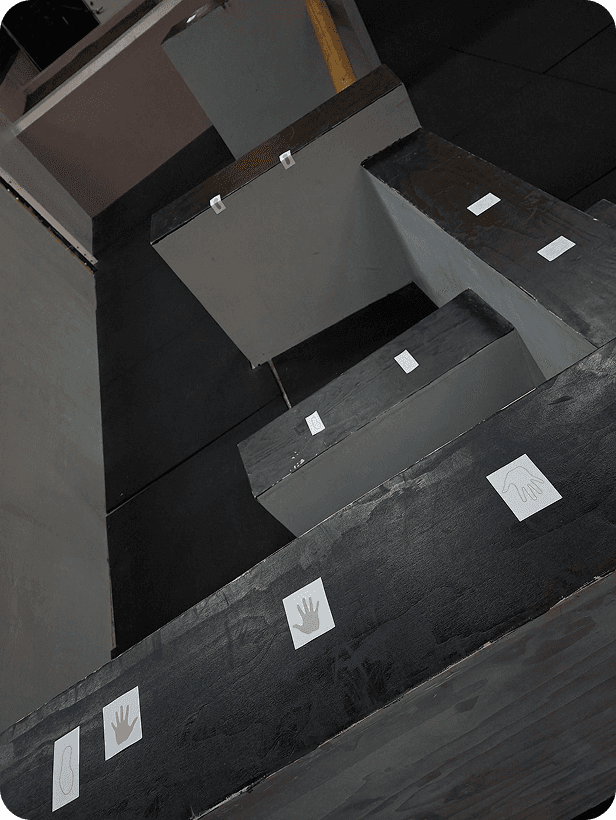
In the prototyping phase, various physical markers and symbols were developed as stickers. Challenges were color-coded by difficulty: white for easy, gray for medium, and black for hard.
In the prototyping phase, various physical markers and symbols were developed as stickers. Challenges were color-coded by difficulty: white for easy, gray for medium, and black for hard.
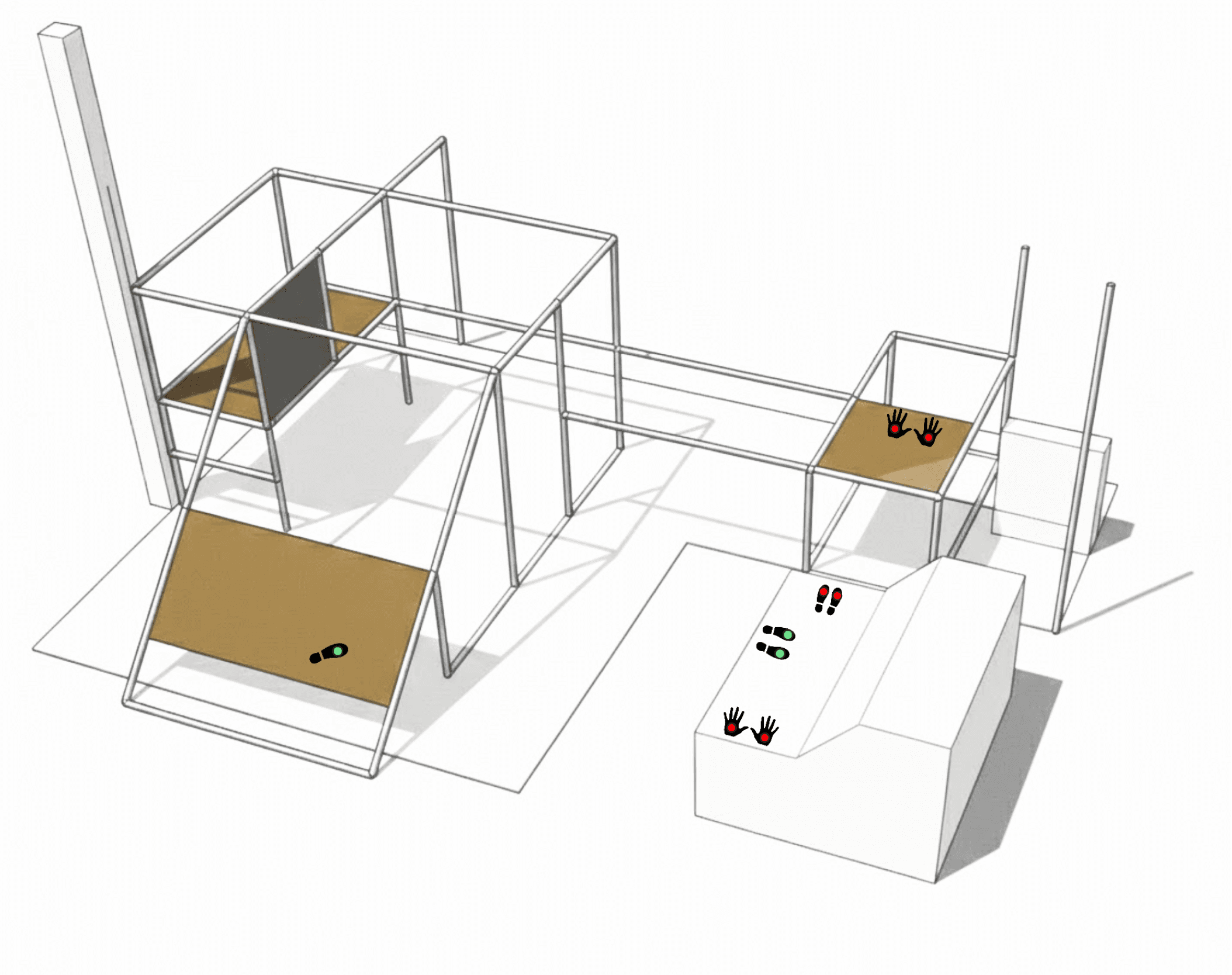
Markers indicate hand and foot placement for starting positions and landings. QR codes link to short videos demonstrating how to complete each challenge.
Markers indicate hand and foot placement for starting positions and landings. QR codes link to short videos demonstrating how to complete each challenge.





AI-generated image
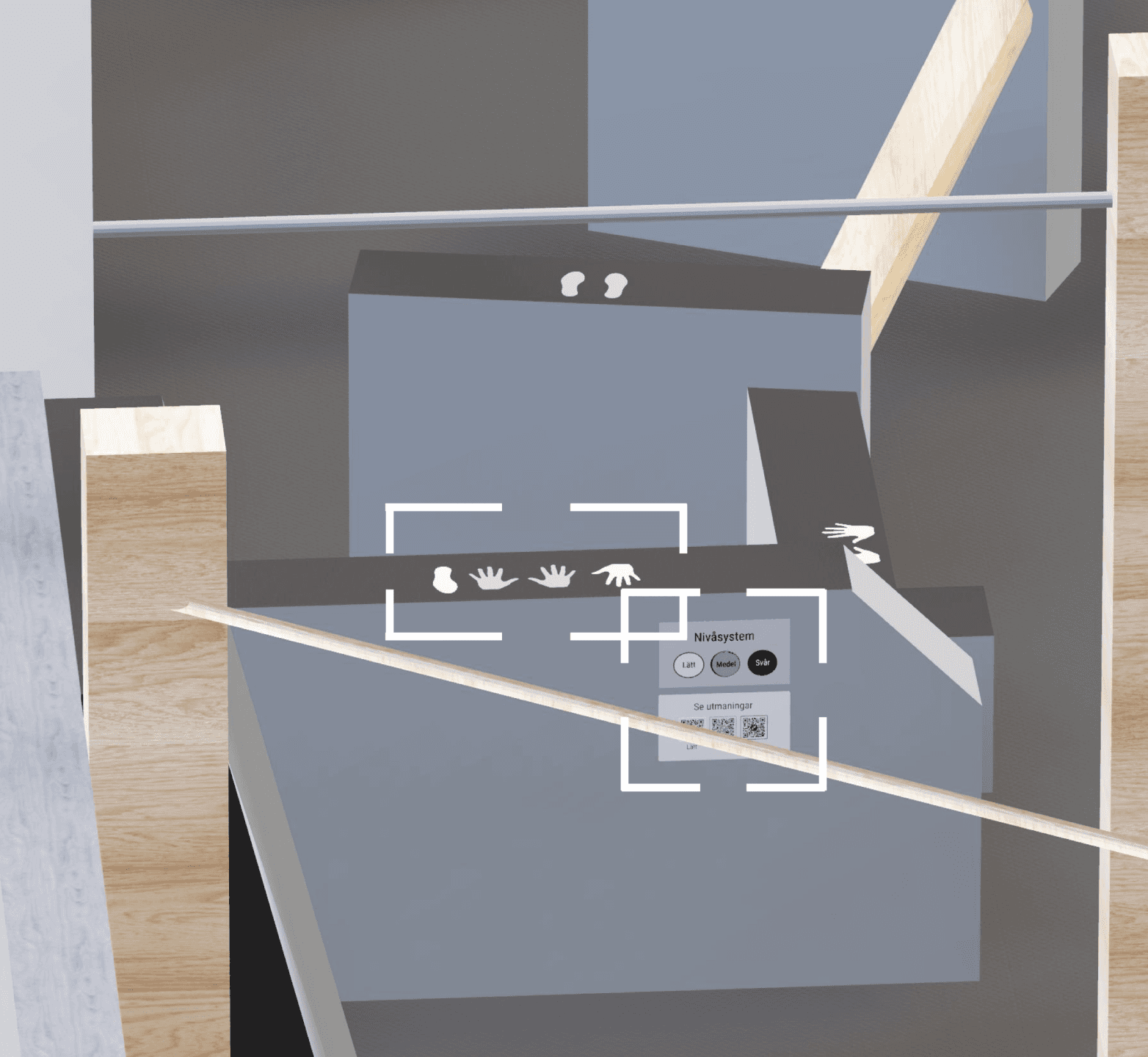
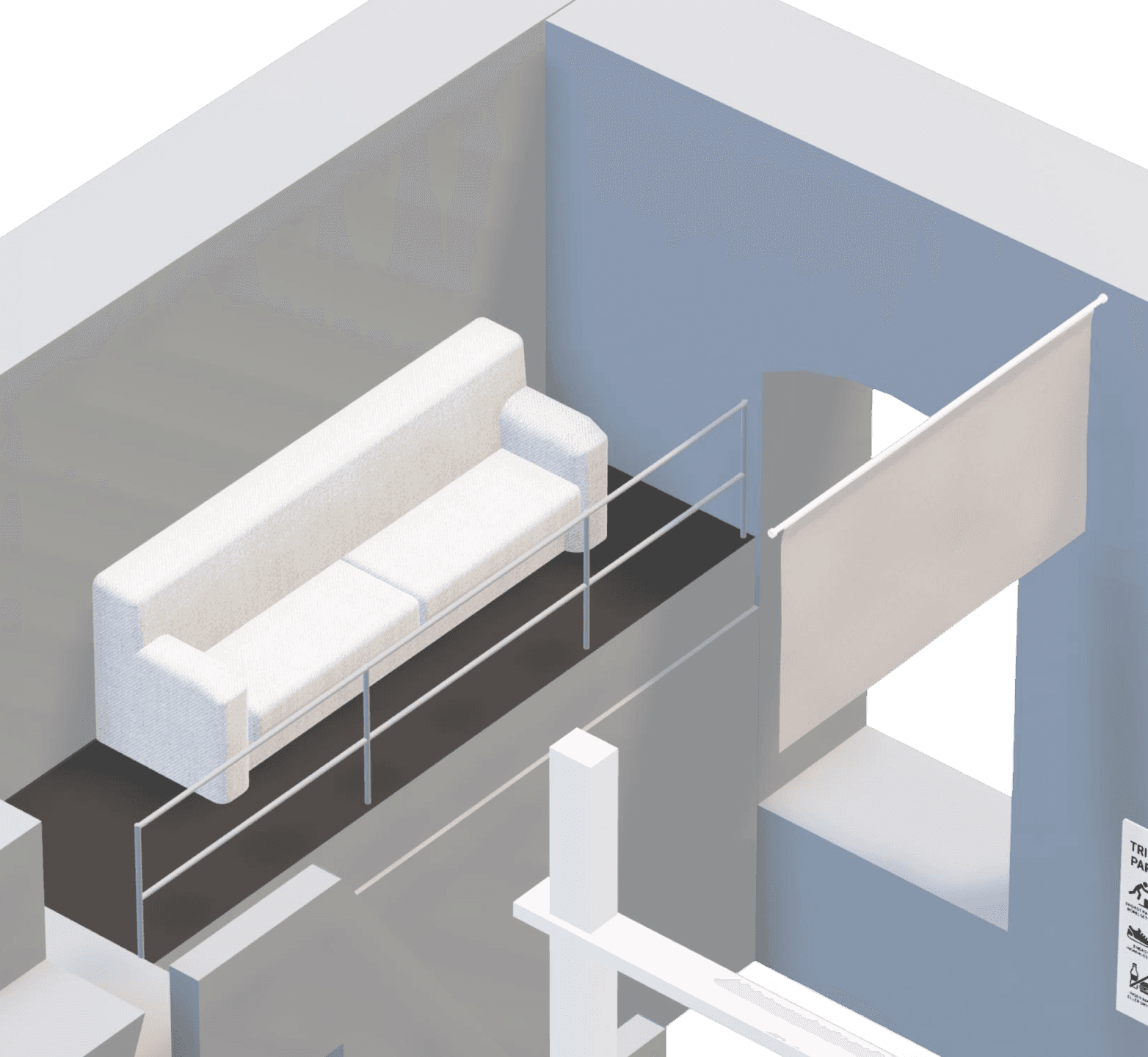
A 3D visualization of the facility that existed was adapted with the proposed solutions, while also being integrated into the app’s zoning system. A recovery area was visualized with a screen displaying challenges for inspiration.
A 3D visualization of the facility that existed was adapted with the proposed solutions, while also being integrated into the app’s zoning system. A recovery area was visualized with a screen displaying challenges for inspiration.
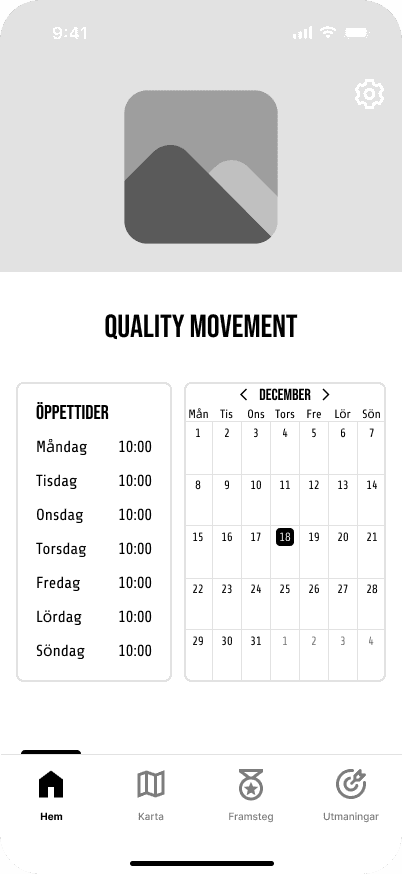
A mid-fidelity app prototype was created in Figma, featuring views for tracking progress, active challenges, and unlockable badges.
A mid-fidelity app prototype was created in Figma, featuring views for tracking progress, active challenges, and unlockable badges.

Test
Test
The solutions were tested with users in Parkourhall1. The results clearly showed that symbols were more effective than text for communicating rules, as they were easier to understand and remember.
The solutions were tested with users in Parkourhall1. The results clearly showed that symbols were more effective than text for communicating rules, as they were easier to understand and remember.
Analog solutions were preferred during training, while the app was more useful before and after sessions for planning and reflection.
Analog solutions were preferred during training, while the app was more useful before and after sessions for planning and reflection.
The level system also proved to increase motivation for most users.
The level system also proved to increase motivation for most users.
Final Design
Final Design
The final solution combines analog and digital elements, where the analog experience forms the foundation and the digital solution acts as a complement.
The final solution combines analog and digital elements, where the analog experience forms the foundation and the digital solution acts as a complement.
The prototype was fully fleshed out into a high-fidelity prototype in Figma. The badges were AI-generated to explore visual style and direction.
The prototype was fully fleshed out into a high-fidelity prototype in Figma. The badges were AI-generated to explore visual style and direction.
Reflection
Reflection
One of the project’s strengths was the research, combining surveys and interviews to build a comprehensive understanding of user needs. Testing solutions directly in the environment provided valuable insights, especially that analog solutions are more effective during training and that symbols outperform text.
One of the project’s strengths was the research, combining surveys and interviews to build a comprehensive understanding of user needs. Testing solutions directly in the environment provided valuable insights, especially that analog solutions are more effective during training and that symbols outperform text.
The four-week timeline was a limitation. With more time, the app could have been tested over a longer period to better understand real usage patterns. Additional iterations on visual elements, such as the level system, could have made them even more intuitive. Testing with completely new users could also have provided deeper insights into onboarding.
The four-week timeline was a limitation. With more time, the app could have been tested over a longer period to better understand real usage patterns. Additional iterations on visual elements, such as the level system, could have made them even more intuitive. Testing with completely new users could also have provided deeper insights into onboarding.
A key takeaway is that clarity often outweighs adding more features. The project also deepened the understanding of designing for physical versus digital environments, and highlighted how analog solutions can sometimes be more effective. Finally, it reinforced how crucial the social experience is for motivation and retention.
A key takeaway is that clarity often outweighs adding more features. The project also deepened the understanding of designing for physical versus digital environments, and highlighted how analog solutions can sometimes be more effective. Finally, it reinforced how crucial the social experience is for motivation and retention.